
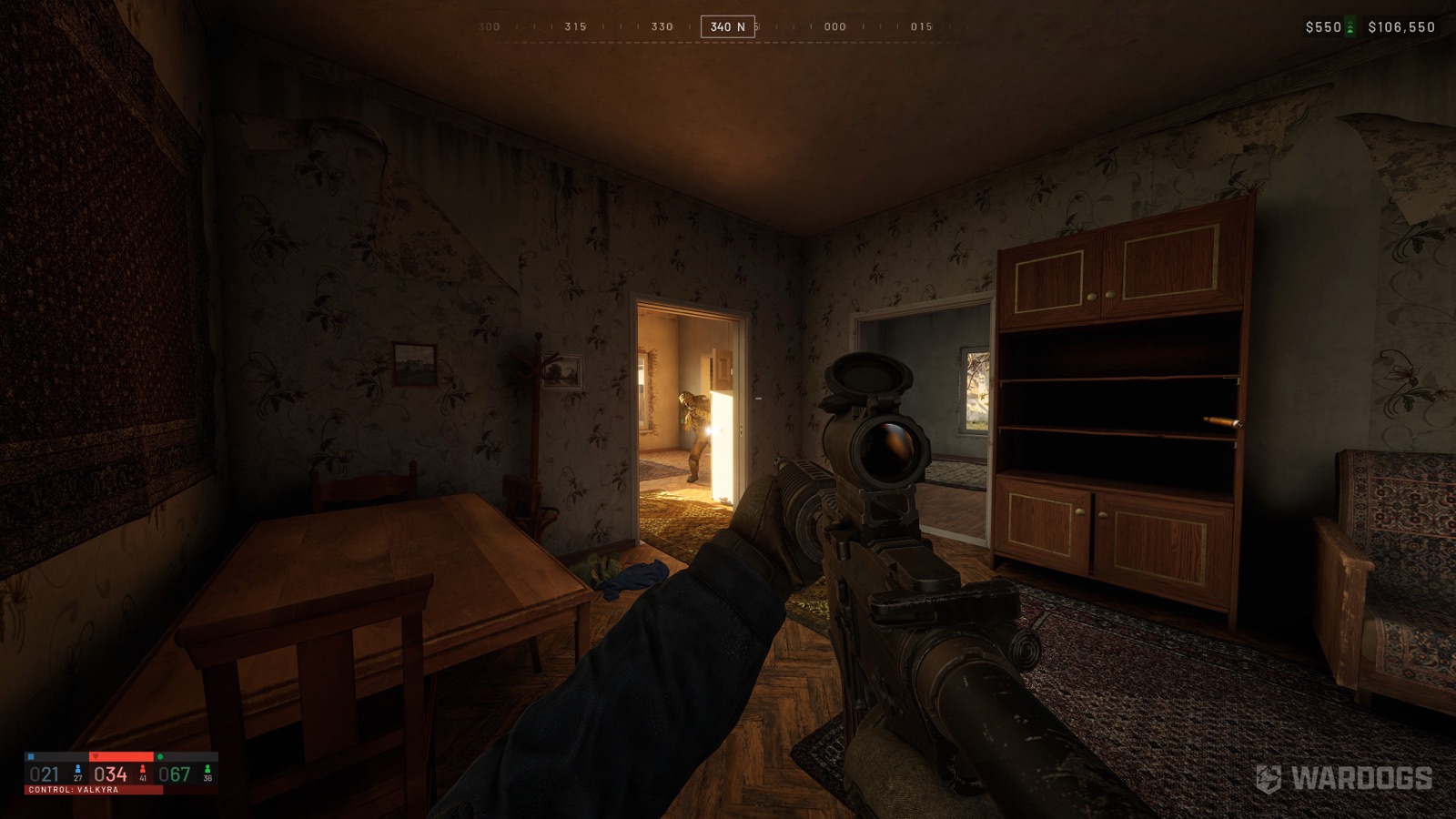
Start with the Mission, Not the Weapon
The same rifle can be sensible in one plan and wasteful in another. Before entering the vendor, define the engagement range, travel method and team job. A close objective reached by armored transport creates a different inventory problem from a long walk to an exposed defensive ridge.
Use a one-sentence mission such as "escort the medic through the eastern approach" or "watch the vehicle road while the squad scores." Every item should support that sentence. Remove equipment purchased only for a hypothetical second or third role.
Calculate the Complete Life Cost
The primary weapon is only the most visible line in the budget. Include:
- Primary and secondary weapon
- Optic, muzzle, grip or other attachments
- Compatible magazines and ammunition
- Armor, helmet and backpack
- Medical items and throwables
- Role tools, explosives or construction equipment
- Any personal share of transport risk
Then reserve the cost of a fallback kit. The money remaining after both numbers is the amount available for experimentation. This prevents one failed test from removing your ability to participate in the rest of the match.
Use Three Budget Bands
Recovery Kit
A recovery kit restores useful presence after a bad loss. It should be inexpensive, easy to understand and capable of one team job. Use it to regain information, join a larger group or generate income without gambling the reserve.
Standard Kit
The standard kit is the loadout you can repeat several times. It matches the most common engagement range and includes the medical or utility required for the assigned role. Most lives should begin here.
Commitment Kit
A commitment kit uses expensive armor, specialist weapons or premium utility when the team has a clear opportunity: reliable transport, known enemy composition and a position likely to remain valuable. Do not buy it to repair morale after a loss.
Budget bands are relative to the current balance and recorded prices. The weapon list provides dated price fields; always read the capture date with the number.
Weapon Selection by Distance and Task
Start with the terrain you expect to occupy. Indoor or dense residential fighting favors handling and rapid follow-up shots. Open approaches reward controllable fire, usable optics and ammunition planning. Vehicle denial requires a specialist tool and teammates who can protect the operator.
Damage alone does not select the best weapon. Rate of fire affects ammunition consumption, recoil affects practical hit rate, and weapon price changes the number of attempts the balance can support. Compare the complete use case rather than sorting one statistic.
When testing a new weapon, keep the rest of the kit familiar. Changing the weapon, ammunition, optic and route together makes the result impossible to diagnose.
Magazines, Loose Ammo and Backpack Space
Current Beta material describes separate magazine and ammunition handling. A reload can exchange the inserted magazine without magically filling empty magazines. Loose ammunition may provide better space efficiency than carrying many complete magazines, but it also requires time and a safe moment to refill them.
Plan ammunition around the job:
- Carry ready magazines for the first contact.
- Carry reserve ammunition only if the life is expected to remain in the field.
- Leave inventory space for role tools and recovered supplies.
- Refill before the squad begins a push, not while everybody is already moving.
- Confirm that ammunition and magazines are compatible with the chosen weapon.
Exact stack sizes, inventory dimensions and controls are version-sensitive. Test them in headquarters before relying on a field workflow.
Armor and Medical Items
Armor changes survivability but cannot compensate for an exposed route. Buy protection when it increases the chance of completing a valuable job, not simply because the balance allows it.
Medical items should support the plan. A solo scout may need enough self-care to return from a flank. A medic requires equipment for repeated support and must preserve inventory for that role. An assault player carrying a complete medic inventory may spend money on tools that never leave the backpack.
Avoid stacking every form of protection into a kit with no mobility or fallback budget. Survivability is a combination of cover, information, movement, armor and medical support.
Role-Based Loadout Questions
Assault
Can the weapon handle the expected approach, and is there enough ammunition for more than the first room or ridge? Is one medical item more useful than another grenade?
Medic
Can the medic survive behind the first contact, reach casualties and leave inventory space for repeated support? The Medic guide covers revive priority and safe positioning.
Recon
Does the optic or spotting tool produce useful information at the actual terrain distance? Is the kit light enough to relocate when the third faction appears?
Engineer or Anti-Vehicle
Can the specialist tool be protected by the rest of the kit, and is there a realistic target on the route? Do not pay for a launcher when the squad has no vehicle information.
Driver or Pilot
Can the personal kit survive an emergency dismount without making the transport loss financially catastrophic? The vehicle and passenger kits share the same event risk.
Evaluate the Kit After Use
After each death or successful return, mark every item as essential, helpful, unused or missing. Remove repeatedly unused items. Add a missing item only when you can describe the event it would have changed.
Also record why the life ended. If the failure was poor information or route choice, weapon upgrades are unlikely to solve it. If the weapon could not cover the required distance despite correct positioning, change the weapon or role.
Five Loadout Mistakes
- Pricing the rifle but treating ammunition and attachments as free.
- Buying for every possible range instead of the expected fight.
- Carrying several specialist jobs in one expensive backpack.
- Upgrading immediately after a profitable life without identifying a limitation.
- Rebuying the same kit after the objective and team need have changed.
A Repeatable Purchase Checklist
- State the job and expected distance.
- Choose the weapon and compatible ammunition.
- Add only the medical and utility required for the job.
- Calculate the complete life cost.
- Protect the fallback reserve.
- Confirm the transport plan.
- After use, remove one item that did not contribute.
Verification Notes
Item prices, inventory sizes, armor effects, ammunition behavior and attachment balance can change. This page intentionally uses a budget method rather than a permanent "best build." Use dated database records to plan, then verify the current vendor before purchasing.
Sources and Tools
Last checked: 2026-08-24. Prices and balance values require a current-build check.