
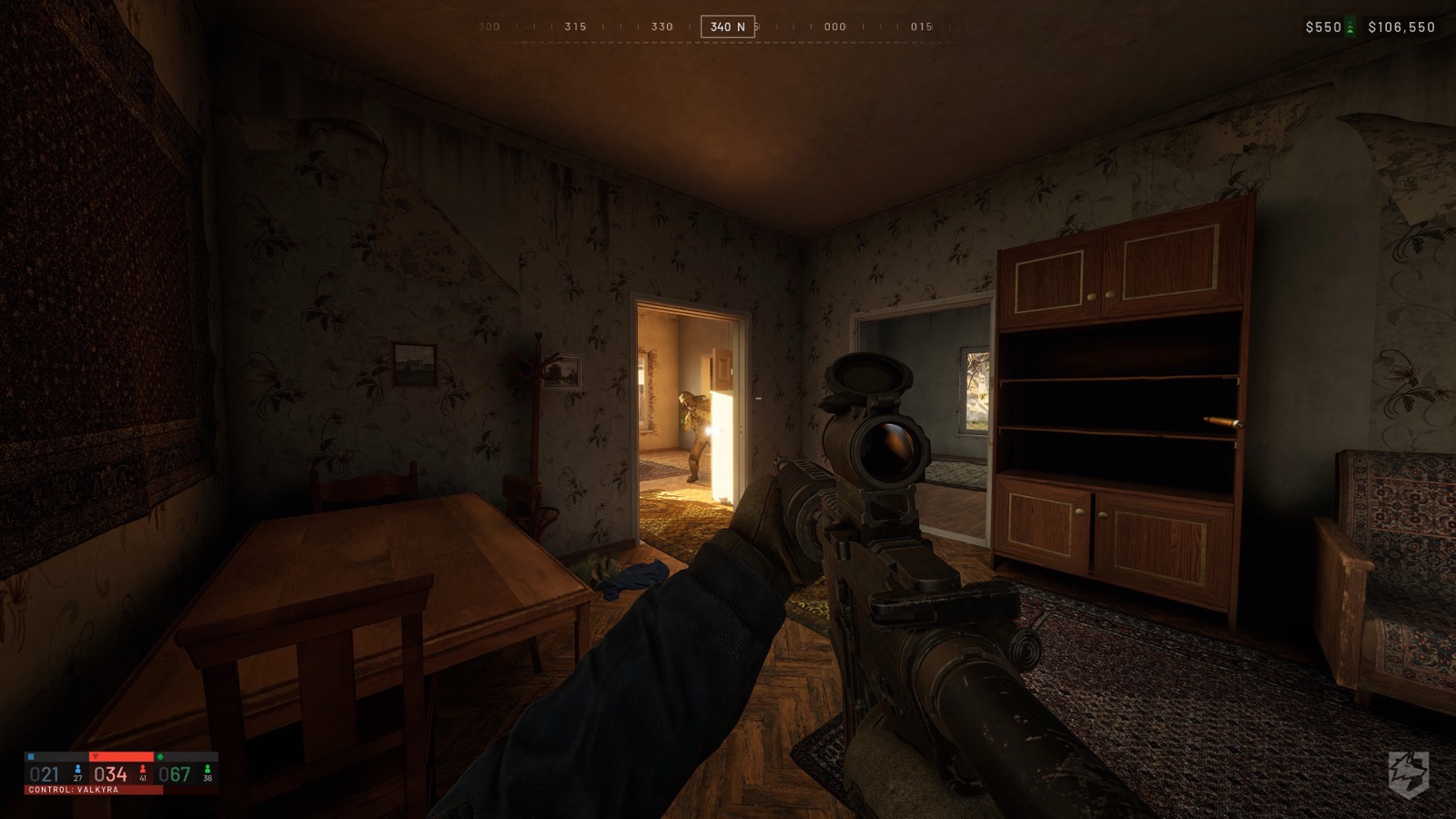
Decide What the Position Must Do
An engineer should be able to finish this sentence before spending materials: "This position lets our team ___." Useful answers include holding an approach through the next scoring window, protecting a supply route, keeping a spawn or transport asset operational, or giving medics a covered casualty collection point.
"Make this building stronger" is not specific enough. A structure can be difficult to destroy and still be irrelevant after the objective moves. Start from the time the position must remain useful, the direction of the expected attack and the friendly route that must never be blocked.
Audit the Site Before Building
Walk the intended position once without placing anything. Identify:
- The primary enemy approach
- The second route a third faction can use
- Friendly entry and exit lanes
- Vehicle clearance
- Lines of sight from higher ground
- A protected place for repair and medical work
- The direction of the next likely rotation
Then choose the smallest change that improves the site. One piece of cover that breaks a dangerous sightline can matter more than a complete wall around a location nobody can leave.
Create Layers, Not a Sealed Box
A useful defense has an observation layer, a contact layer and a fallback layer. The observation layer warns the team before the attack reaches the walls. The contact layer slows or exposes attackers. The fallback layer gives survivors somewhere to move when the first line is lost.
Sealing every opening often removes the defenders' own crossfire and escape. Leave routes that friendly infantry can understand under pressure. If an opening is intentionally dangerous, make sure it is covered rather than merely narrow.
Vehicle access requires separate planning. A doorway that works for infantry can trap a logistics vehicle, block a repair approach or force armor to reverse through a kill lane. Check turning space before completing a barrier.
Place Cover Without Creating Enemy Cover
Every object has two faces. Ask what an attacker gains after reaching the outside surface. Tall cover near an entrance may let friendly players peek safely, but it can also hide an enemy preparing explosives or a breach.
Stagger cover so defenders can see the spaces between pieces. Avoid a continuous safe path that lets attackers advance without exposure. Keep enough distance from critical assets that one explosive event does not affect the asset, repair team and ammunition or supplies together.
Repair Priority: Mobility Before Perfection
Repair the function the team needs, not whichever health bar is lowest. A damaged transport that can still leave the danger area may need a quick mobility repair before complete restoration. A static asset covering the only vehicle lane may deserve immediate attention even when another object is closer to destruction.
Use this priority order:
- Keep the engineer and repair angle alive.
- Restore movement or the critical weapon system.
- Move the asset away from repeated damage when possible.
- Complete the repair only after security is restored.
Do not stand on the predictable damaged side of a vehicle. Enemy players often hold the repair angle instead of shooting the asset continuously. Ask infantry to clear the lane, use hard cover and stop repairing when the threat returns.
Breaching Requires a Follow-Up Team
Opening a wall or removing an obstacle has value only when somebody can use the opening. Before a breach, call the exact entry, the expected defender angle and the first piece of cover beyond it. A breach without smoke, suppression or a follow-up squad simply creates a new firing lane for the defenders.
Engineers should also consider whether the existing doorway is deliberately watched. Creating a second angle can split defender attention, but too many openings can remove the attackers' ability to control their own rear.
Engineering and the Cash Economy
Tools, deployables and the weapon used to defend the work all belong to the life budget. An engineer carrying expensive combat equipment plus several specialist tools can become one of the most costly casualties on the route.
Choose a weapon suited to the expected defense distance, then preserve the budget for the actual engineering task. Beta reports connect construction, repairs or support work with progression and income, but exact rewards remain build-sensitive. The reliable return is the team value created when a route, vehicle or defensive position remains usable.
When to Abandon a Fortification
Leave when the position no longer protects score, transport or a repeatable route. Signs include:
- The objective has moved beyond supporting distance.
- The fallback route is already cut.
- The third faction controls the rear approach.
- Repair materials or supplies cannot reach the site.
- Attackers can use the outer structures as safer cover than defenders.
- Too many players are staying to protect the investment instead of the objective.
Do not defend construction simply because it was expensive. Sunk cost is not tactical value. Recover mobile assets, warn the team which routes are compromised and build the next position earlier.
Engineer Loadout Checklist
- One clearly defined build, repair or breach task
- A weapon appropriate for the site rather than every possible range
- Medical support for surviving the work, not for replacing a dedicated medic
- Enough inventory space for the required tool and materials
- A route that allows the engineer to withdraw with the team
- A fallback kit that can still perform basic repair or construction work
Common Engineering Mistakes
Building before reading the objective
The best-built position is useless when the scoring fight moves elsewhere before completion.
Blocking friendly circulation
Defenders need to rotate, medics need to reach casualties and vehicles need turning space. Test the route from the perspective of each role.
Repairing under a held angle
Repair audio and a stationary target make the engineer predictable. Security comes before the final percentage of health.
Building only for the first enemy team
Three-team pressure means the rear can become the front. Preserve observation and fallback coverage in both directions.
Verification Notes
Available building pieces, material costs, construction timing, repair rates and progression rewards can change between builds. This guide focuses on site selection, route design and repair priority because those decisions remain useful when individual values change.
Sources and Related Guides
Last checked: 2026-08-24. Build costs and repair values require a current client.